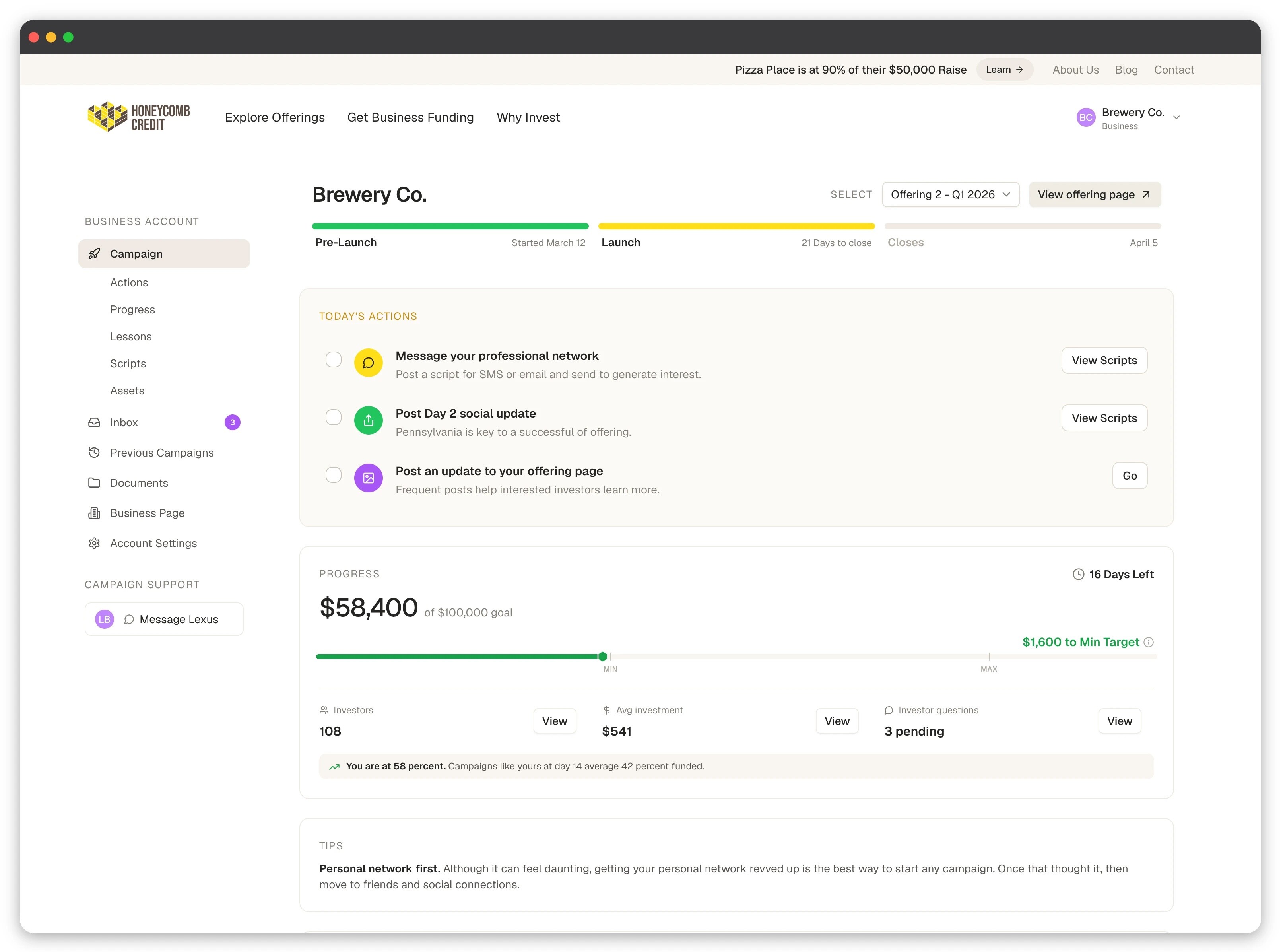
As fractional design director for Honeycomb Credit, I owned research, customer journey, UX, messaging, and the design system across a community lending platform serving small business owners raising capital and everyday community members investing in them. Over six months I reframed the company's growth strategy around repeat investment and unified brand, messaging, and product under a single evidence-backed foundation.
Problem
Honeycomb Credit had built a working platform serving two very different audiences at once. Recent acquisitions added reach and also fragmentation. Brand, messaging, and product decisions were being made without a shared foundation, so the experience drifted from one touchpoint to the next. My suspicion was that the platform wasn't building and nurturing trust across the full life of a user, from a borrower's first visit through repayment and an investor's decision to invest again. I needed evidence to confirm it.
Solution
One coherent experience across brand, product, and the moments that build trust. I defined the messaging architecture, led the creation of the end-to-end journey, and built a unified design system structured to move straight from Figma into code, keeping design and engineering in sync so future decisions stay consistent. The deliverable the team could act on was a clear point of view backed by data, absorbed into their roadmap and prioritized against as a single source of truth.
My Approach
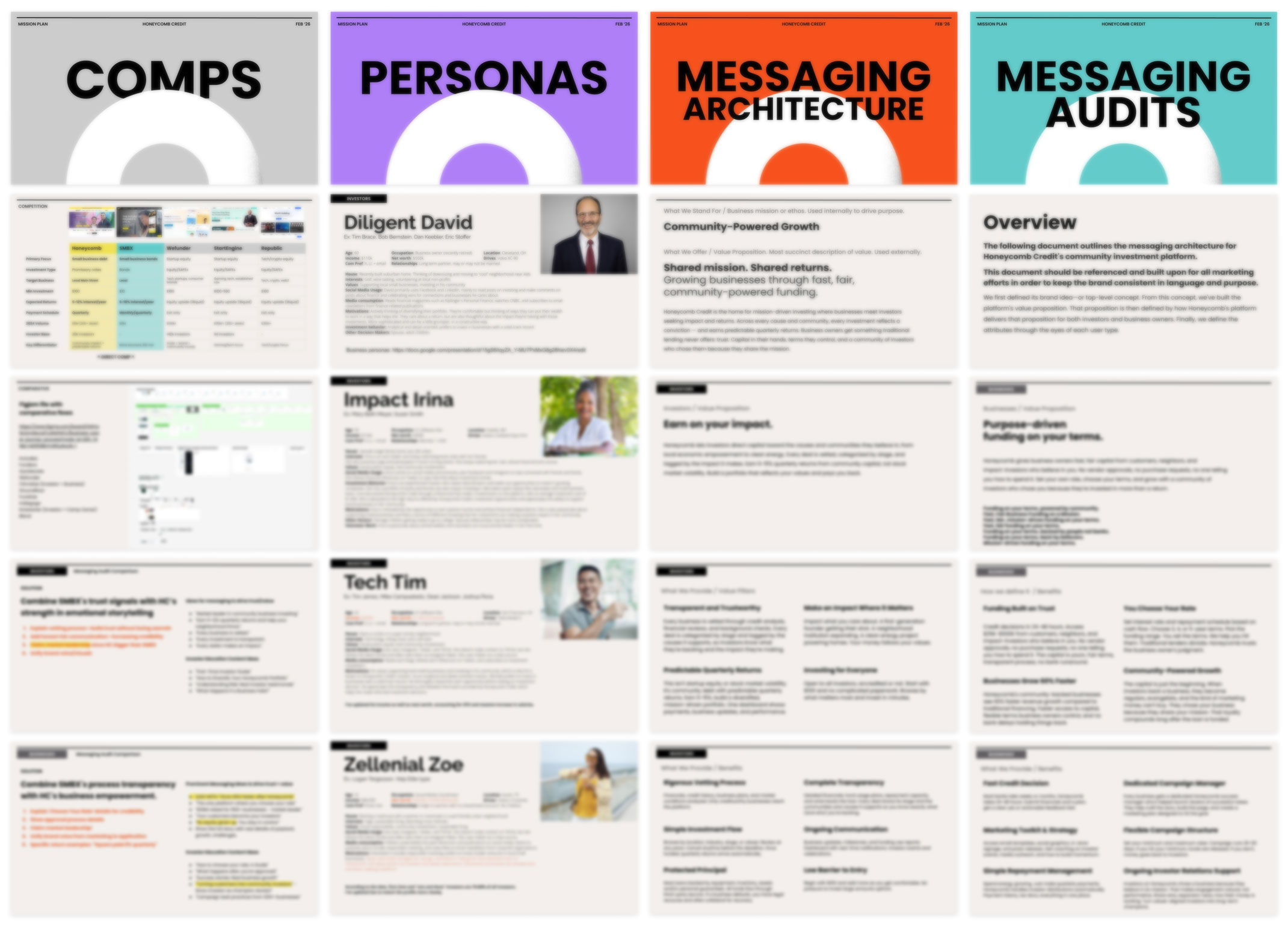
I embedded with Honeycomb's team for 5 months, owning research, customer journey, UX, messaging, and the underlying design system. It started where every project does, with a Mission Plan, which gets assumptions out of everyone's heads and onto the table. Define success in measurable terms, build the messaging architecture, refine personas, run the competitive analysis. The goal is to become a genuine expert in the product before proposing a single solution.


Building the Evidence
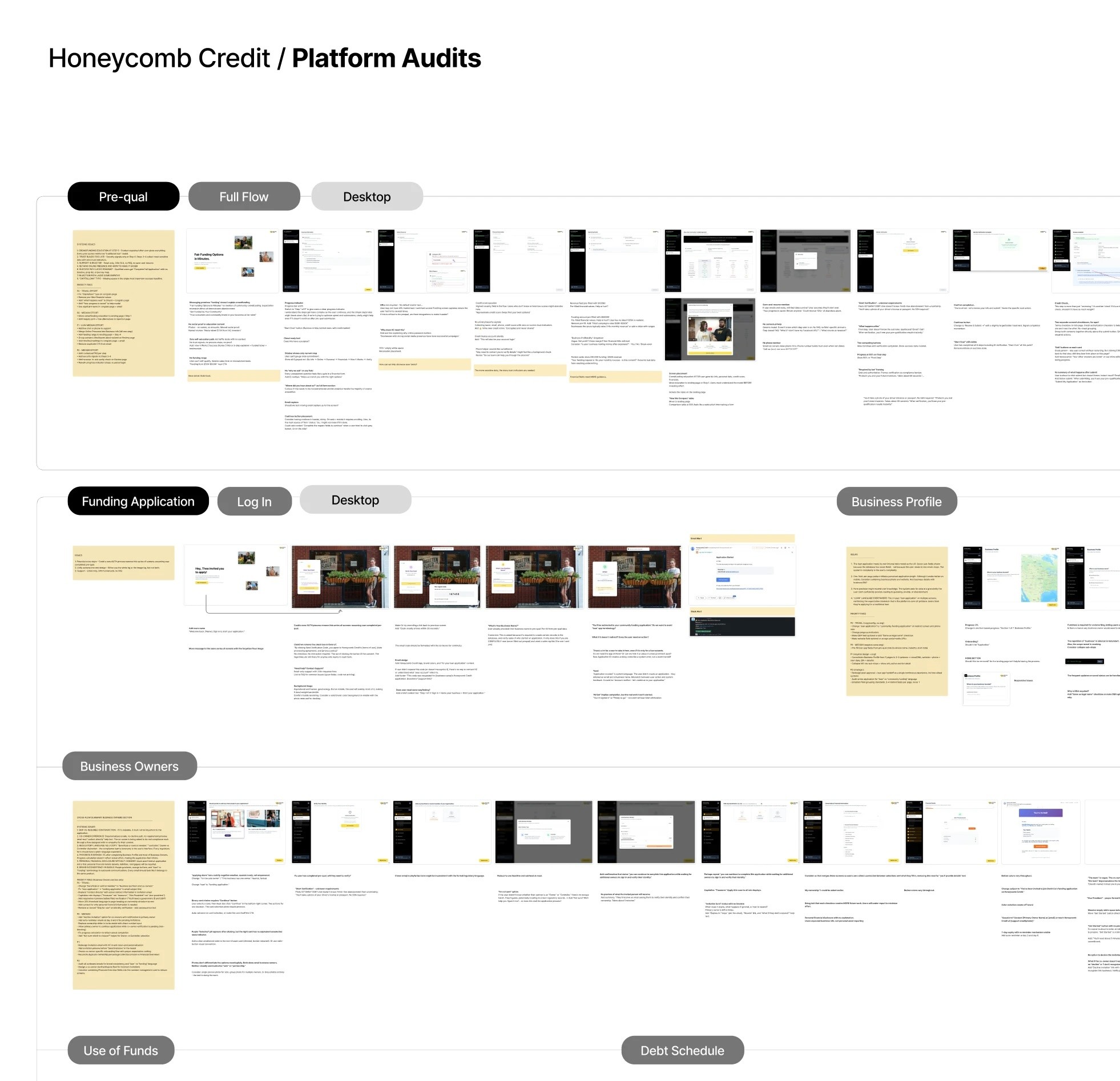
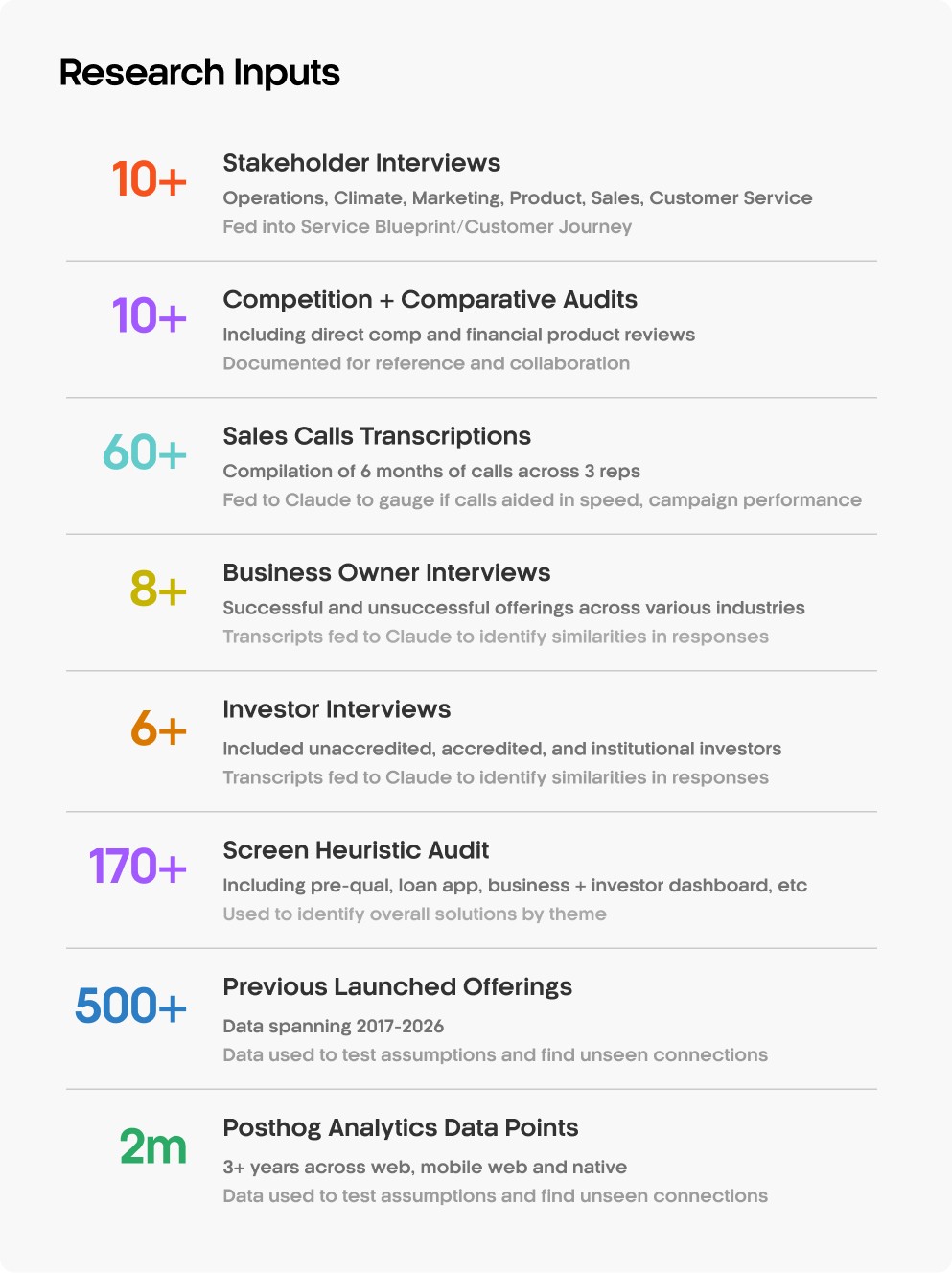
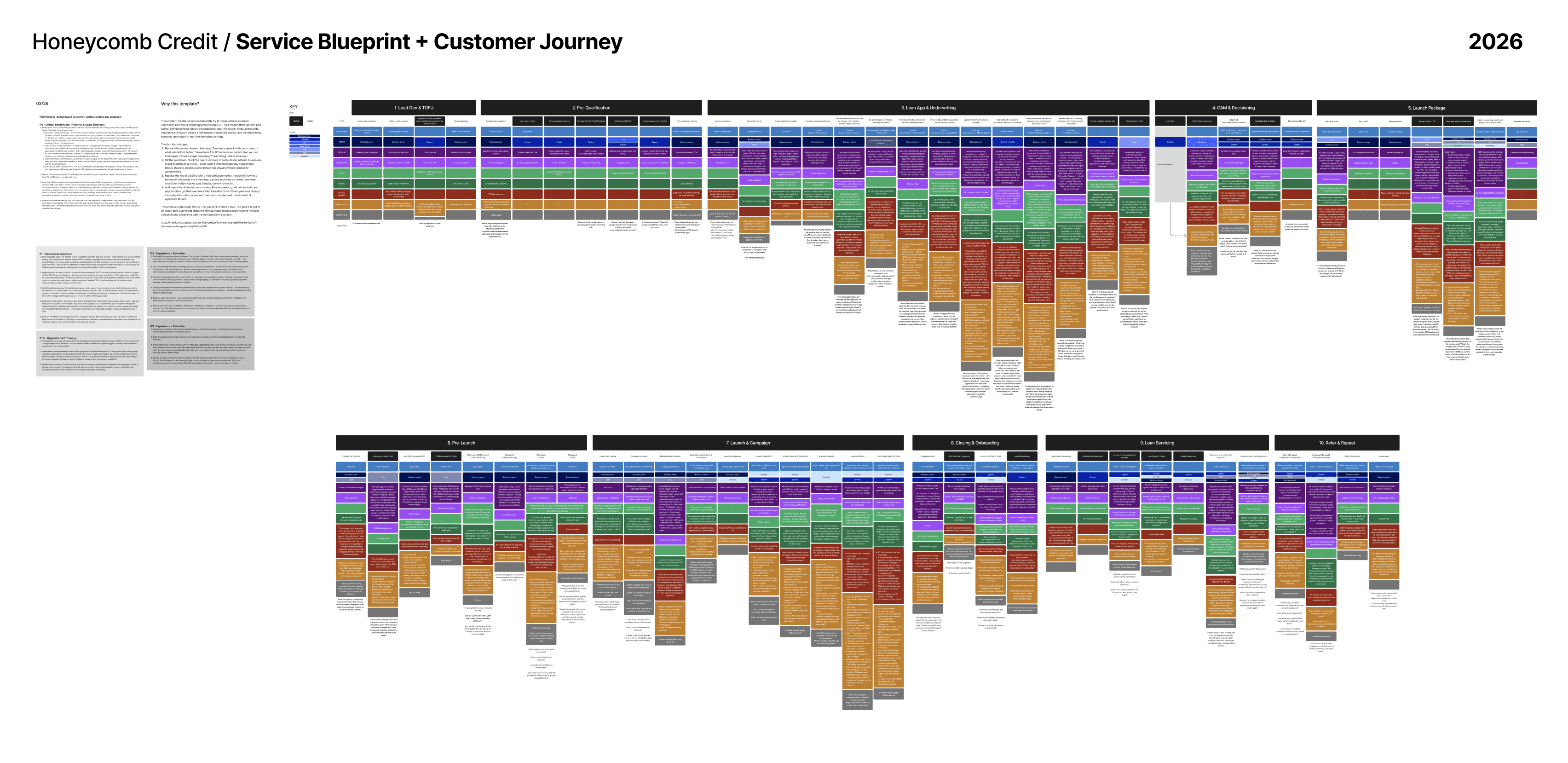
I ran a heuristic audit across 170-plus screens, documenting friction and points of doubt across the business owner, retail investor, and institutional investor paths. I grounded it in real behavior with an analytics review and a full-lifecycle service blueprint that traced a loan from both sides.
I then interviewed people inside the company and out. Internal stakeholders across operations, climate, marketing, product, sales, and customer service, plus first-time retail investors, institutional investors managing six figures across multiple loans, and business owners who had run a raise. Patterns surfaced independently across every source, which is how I separated signal from noise. It rolled up into one living document the whole team shared.
Reframing the Growth Strategy
The research changed the question. Honeycomb was optimizing to win that first investment. The evidence showed the real growth lever was repeat investment and the lifetime value of the investors already on the platform. The product was built to process a first investment efficiently. It wasn't built to compound. The reason was trust.
The moment money left an investor's wallet, the platform went quiet. Investors couldn't tell when repayment would start or whether the silence was normal. Business owners met the same silence from the other side and absorbed the blame when the platform's own systems failed. The most cross-validated finding in the study was this shared dark period between investment and first repayment, the exact window where trust should have been compounding. My job wasn't to hand over a prettier screen. It was to prove, with evidence, that the growth they wanted lived in how the whole experience ties together.
The Impact
Reframed the growth strategy around compounding repeat investment, backed by a 170-plus screen audit, interviews across three user types, and a full-lifecycle service blueprint.
Identified the dark period between investment and repayment as the single most cross-validated problem, with a fix that turns it into a relationship-building window for both sides.
Unified brand, messaging, and product under one documented foundation so teams make consistent decisions after acquisitions reshaped the business.
Delivered a design system wired from Figma into code, giving design and engineering one source of truth for a two-sided experience.
Timeframe
5 Months
Industry
Fintech